
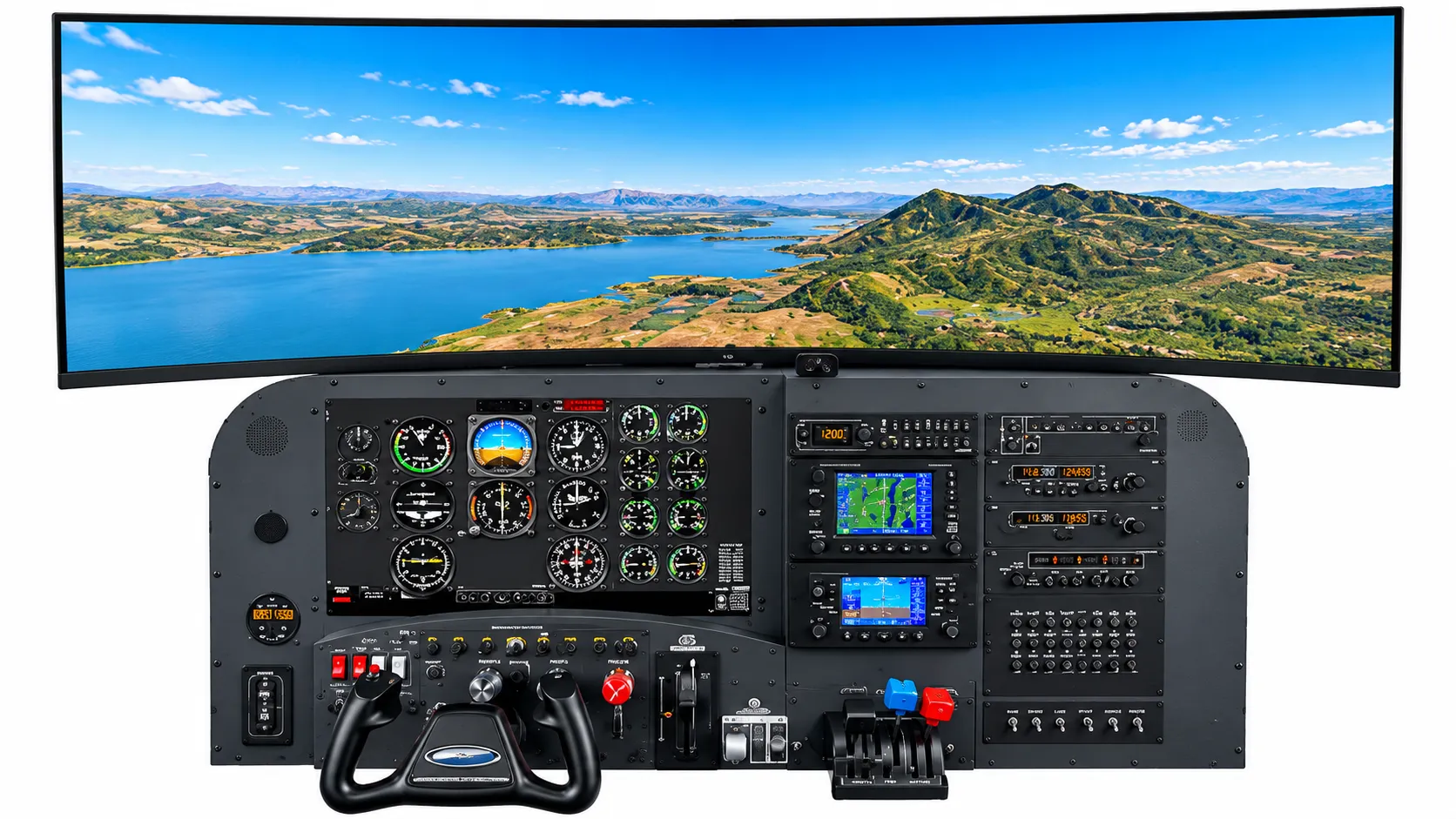
Throttle
The throttle sets engine power. More power with the same pitch attitude means a climb; less power means a descent. Pilots learn to think of pitch plus power together: the combination, not either alone, determines what the aircraft does.
In a typical light aircraft the throttle is a push-pull knob or a lever on a quadrant. A red knob beside it controls the fuel mixture.
Trim
Holding steady back pressure on the yoke for a whole flight would be tiring. The trim wheel adjusts a small tab on the elevator so the aircraft holds the attitude you want with no pressure on the controls. Set the attitude first, then trim away the pressure. A well-trimmed aircraft is dramatically easier to fly.
Flaps
Flaps extend from the trailing edge of the wing. They increase lift and drag, which lets the aircraft fly more slowly and descend more steeply without gaining speed. They are used in stages for take-off and, most of all, for landing.
Extending flaps usually makes the nose want to pitch; expect a small trim change each time you move them.
Try it in the simulator
- Fly level at a cruise power setting and trim until you can let go of the yoke.
- Reduce power by a small amount and watch the aircraft begin a gentle descent without any yoke input.
- Restore the power and watch it level again.
That exercise alone teaches more about pitch, power, and trim than any paragraph can.
Key takeaways
- Throttle sets engine power; with pitch, it controls airspeed and climb.
- Trim removes the control pressure you are holding so the aircraft flies hands-off.
- Flaps let the aircraft fly more slowly and descend more steeply for landing.
Educational material on this website is for familiarization and general interest. It does not replace instruction from a certificated flight instructor, and no simulator time described here should be assumed to count toward any pilot certificate or rating unless Signature-Sky Aviation has confirmed that status in writing.